
The Desperate Attempt to Save the Climate Alarm Narrative

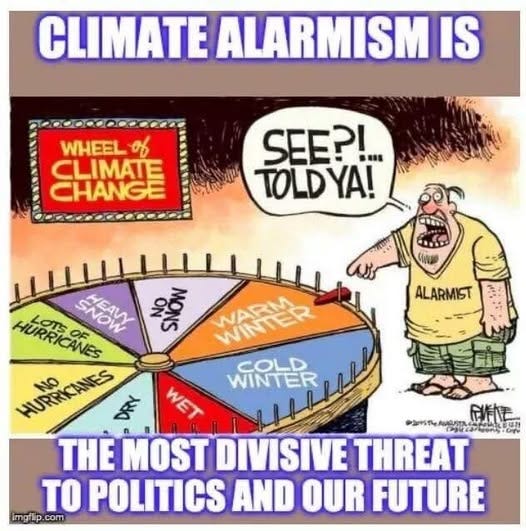
Aaron Regunberg’s essay ‘Why Climate Politics Can’t Wait’ published last week in Boston Review reads as an anxious sermon aimed at wavering Democratic strategists as the mid-term elections approach. Its target is what the party’s own consultants now call ‘climate hushing’ – the quiet retreat from apocalyptic messaging.
As Matt Huber recently wrote in the New York Times, “The Democratic Party remains deeply unpopular. The way out is to stop elevating a litany of single-issue policies that appeal to the already converted. When it comes to climate change, for now, it might be better to say nothing at all.” Huber, like his compatriots on the Left, argues that Democratic advocacy on climate has pushed working people away from the party and that rebuilding a working-class base requires dropping the fight for climate action. New York’s Kathy Hochul, California’s Gavin Newsom, and a growing list of other Democrats – the party’s hitherto leading climate change ideologues – have concluded that talking incessantly about decarbonisation is an electoral liability rather than an asset for the party.
The Boston Review is not some marginal activist newsletter. Founded in 1975 and published in partnership with MIT, it has spent five decades as one of the American Left’s most serious intellectual addresses – the venue where figures like Martha Nussbaum, Amartya Sen and Cornel West have published, and where the ‘Boston Review Forum’ format has shaped how progressive policy elites argue with each other. When something appears there, it is aimed not at swing voters but at the strategists, academics and staffers who set the intellectual agenda for the Democratic Party’s activist wing. That is what makes Aaron Regunberg’s essay worth taking seriously. It is not a fringe complaint. It is the progressive intelligentsia’s own attempt to talk its elected officials out of the very retreat from climate messaging that voters have been rewarding at the ballot box.
Regunberg’s essay leans heavily on the idea that this year’s Strait of Hormuz war has finally handed climate advocates the perfect argument: “Sunlight does not have to pass through the Strait of Hormuz, and nobody ever went to war over wind.” He catalogues three arguments for “hushing” and sets out to demolish each. He fails at all three rebuttals, and the manner of his failure is instructive: concede a little ground to reality, then argue with great sophistication that nothing should actually change with respect to aggressive decarbonisation policies.
Rebuttal One: “Americans care more than the hushers admit”
Regunberg leans heavily on the Yale Programme on Climate Change Communication’s findings in a 2026 survey that majorities of voters blame global warming for rising grocery and utility bills, and that a majority say they would prefer a candidate who supports climate action:
The survey further shows that many climate policies poll very well. Some 77% of voters support regulating carbon dioxide as a pollutant, while 65% support transitioning the US economy from fossil fuels to 100% clean energy by 2050. More than half of registered voters (58%) think that developing clean sources of energy should be a “high” or “very high” priority for the President and Congress, and the same percentage reported that they would prefer to vote for a candidate who supports action on global warming, compared to only 14% who’d prefer a candidate who opposes climate action.
Citing overly broad polling data is the oldest trick in the alarmist playbook: polling on abstract sentiment is worthless once you ask people what they are actually willing to pay. The University of Chicago’s Energy Policy Institute, in its most recent AP-NORC survey, found that fewer than four in ten Americans would accept even a token one-dollar-a-month carbon fee, a figure that has been falling for years.
The claim that public concern for climate is deeper and more actionable than the “hushers” admit leans heavily on surveys showing majorities agree the climate is changing and support vague goals such as regulating carbon dioxide or expanding renewables. Yet these numbers evaporate when respondents are asked what they are prepared to pay. As critics have long noted, abstract support for environmental goals collapses once trade-offs in household budgets are introduced.
Regunberg’s own preferred source, the Searchlight Institute, found that only 17% of battleground voters say climate change affects their family “a great deal”. Caring about climate change in the abstract, the way one cares about world peace, costs nothing. Caring enough to accept higher energy bills is a different matter entirely, and it is the only kind of caring that determines whether a policy survives contact with a legislature. Regunberg never asks his readers to pay anything; he asks them only to vote for politicians who promise, vaguely, to make polluters pay.
Rebuttal Two: “Climate action is compatible with a working-class agenda”
Here Regunberg invokes Franklin Roosevelt’s Civilian Conservation Corps and Bernie Sanders’s 2016 campaign to argue that green politics and working-class politics have always been natural allies. The historical analogy is entirely beside the point. Roosevelt’s New Deal conservation programmes planted trees; they did not attempt to re-engineer the physical basis of an industrial economy inside a single generation. The obstacle facing today’s energy transition is not rhetorical positioning but arithmetic.
On the International Energy Agency’s own reckoning, renewables – after decades of subsidy, mandate and moral exhortation – are on track to reach barely a fifth of global final energy consumption by 2030, up from 13% in 2023. Heat, which the IEA notes accounts for almost half of final energy demand, remains overwhelmingly fossil-fuelled; aviation and shipping remain, in the IEA’s own words, almost entirely dependent on oil. Something on the order of four-fifths of global energy demand simply cannot be electrified on any timeline that a democratic electorate would tolerate.
Rebuttal Three: “Fighting fossil fuels strengthens democracy”
The most revealing of Regunberg’s three rebuttals is the one that abandons economics altogether and retreats into conspiracy. He traces the Supreme Court’s ‘shadow docket’, the erosion of trust in science and the broader crisis of American democracy back to a decades-long fossil-fuel plot, and concludes that defeating authoritarianism therefore requires defeating Big Oil. This is a threadbare piece of institutional scapegoating of exactly the kind that has kept the climate-industrial complex solvent for 30 years: every inconvenient political development, from populist scepticism to judicial conservatism, is retrofitted into evidence of fossil-fuel malfeasance.
It conveniently ignores that the scientific foundation for the ‘existential threat’ framing Regunberg still leans on has itself been abandoned by the very institutions that built it. The IPCC’s own modelling community has spent the past several years quietly retiring RCP8.5, the extreme ‘business as usual’ emissions pathway that underwrote a generation of doomsday headlines, on the grounds that it was never a plausible outcome. The pattern now unfolding across the climate Establishment is not retreat but re-armament: concede that the worst-case scenario was fiction, then insist the emergency remains exactly as urgent as before. Regunberg’s essay performs the identical manoeuvre but with democracy in place of temperature. He cites floods, droughts, storms and heatwaves as proof of accelerating catastrophe, but conveniently ignores the empirical record which shows deaths from extreme weather have fallen by more than 96% since the 1920s, even as the global population has quadrupled and the planet has warmed. That is not a world lurching towards fascism-by-heatwave. It is a world getting steadily better at surviving weather, principally because fossil-fuelled economic growth financed the air -conditioning, the flood defences and the early-warning systems that did the actual work.
The institutional tell
What makes Regunberg’s essay worth dwelling on is not its argument but its inadvertent honesty about the state of the climate Establishment itself. He reports, almost in passing, that Politico is folding its climate-focused E&E News, that NPR has shut its climate desk, that the Washington Post’s climate team was laid off, and that even Bill Gates has pivoted to arguing that decarbonisation is not the primary threat to the world’s poor. These are not the actions of an institution confident in the durability of its narrative; they are the retreat from a story that has stopped generating returns, whether in terms of finance, engagement or votes. Regunberg’s response is to insist that the retreat is a political mistake rather than a rational adjustment to changed facts on the ground – falling public willingness to pay, a discredited emissions scenario and an energy transition that, on the IEA’s own numbers, is decades behind the schedule its advocates promised.
The same tell appears in Regunberg’s own choice of evidence for public concern. He cites the 2026 World Risk Poll’s finding that Americans dramatically underestimate how many of their fellow citizens see climate change as a serious threat, and reads this as an untapped reservoir of latent support waiting to be unlocked by braver messaging. A less generous, and I think more accurate, reading is that the gap between stated concern and perceived social consensus reflects exactly the phenomenon that pollsters call preference falsification: people tell survey-takers what sounds civically responsible, while quietly declining, at the ballot box and the checkout counter, to bear any cost for it. Hochul, Newsom and McKee are not misreading their constituents. They are reading them more accurately than the pollsters Regunberg prefers.
What a rational alternative looks like
None of this is an argument for cruelty towards the genuinely poor communities most exposed to weather variability. It is an argument for the kind of policy humility that Friedrich Hayek would have recognised: the refusal to substitute the “fatal conceit” of central planners – in this case, a coalition of activists, editors and consultants convinced they can engineer both a household’s energy budget and its political loyalties through sufficiently alarmist climate messaging – for the dispersed knowledge embedded in market prices and household choices. Voters are not failing to grasp the moral stakes of climate change, as Regunberg supposes; they are making entirely rational trade-offs between an abstract, long-horizon risk and the concrete, immediate cost of heating their homes and filling their tanks.
Democrats who have noticed this are not cowards captured by fossil-fuel money as the ‘climate hushing’ slur implies. They are instead turning “minimally pragmatic to keep their votes” – which, in a democracy, is meant to be the whole point. Regunberg wants Martin Luther King’s urgency applied to carbon dioxide. What he actually needs, and what Boston Review’s readers deserve, is arithmetic: how much energy the world actually consumes, how little of it can currently be electrified, and how little the public – asked honestly, in dollars rather than sentiment – is prepared to pay to close that gap. Until that reckoning arrives, climate politics can wait. The physics of a functioning economy, unlike the politics of a mid-term cycle, cannot.
A version of this article was first published in the Daily Sceptic https://dailysceptic.org/2026/07/17/the-desperate-attempt-to-save-the-climate-alarm-narrative/